The Best Time to Check Your Tire Pressure Is Probably Not When You're Doing It
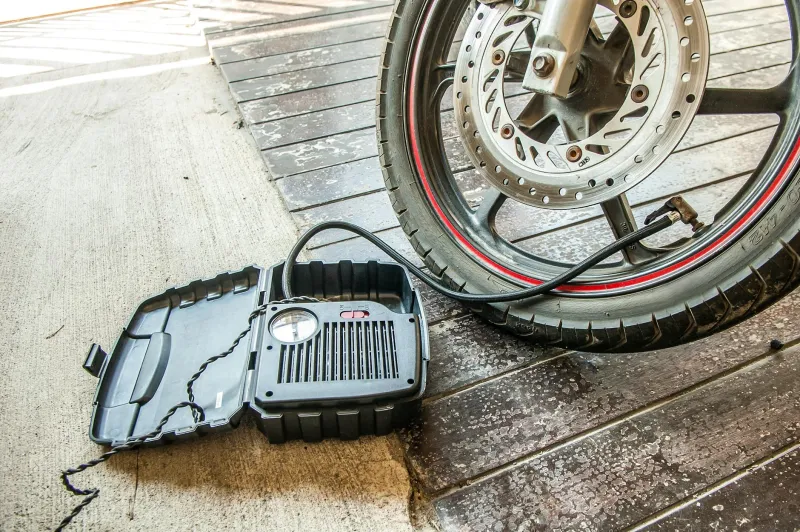
The Tire That Looks Fine Might Not Be Fine
Here's a scenario most American drivers know well: you're heading out in the morning, you glance at your tires, everything looks normal, and you get in and drive. Maybe a warning light blinked on your dashboard a few weeks ago, but it went away, so you figured it sorted itself out.
It almost certainly didn't.
The way most people monitor tire pressure — visually, occasionally, and reactively — is almost perfectly designed to miss the actual problem. And the real issue isn't laziness. It's that tires are genuinely deceptive, and the common-sense instincts most of us use to evaluate them are based on a misunderstanding of how air pressure actually behaves.
Why Your Eyes Can't Tell You the Truth
A tire that is significantly underinflated — say, 20 percent below the recommended PSI — doesn't look dramatically flat to most people. Modern radial tires are designed to maintain their general shape even when pressure drops. The slight bulge at the base, the subtle squish when you press on the sidewall — these are easy to miss unless you know exactly what you're looking for.
By the time a tire looks visibly low, you're often already dealing with reduced fuel efficiency, degraded handling response, and accelerated wear along the outer edges of the tread. The visual check isn't a leading indicator. It's a lagging one.
The only accurate way to know what's happening inside your tires is a gauge. But even then, timing matters more than most people realize.
The Temperature Problem No One Talks About
Air pressure isn't static. It responds to temperature, and it does so in a predictable, measurable way. For every 10-degree Fahrenheit drop in ambient temperature, tire pressure falls by roughly 1 PSI. That might not sound like much, but over a 30- or 40-degree temperature swing — the kind that's completely normal between a warm afternoon and a cold morning in most of the US — you can lose 3 to 4 PSI without anything being wrong with the tire itself.
Now flip that around. When you drive, friction heats your tires. Even a short 10-minute trip can raise tire temperature enough to increase internal pressure by 4 to 6 PSI. That means if you check your tires after driving — even briefly — you're reading inflated numbers that will drop once the tires cool down.
This is why automotive engineers and tire manufacturers are consistent on one point: the only accurate tire pressure reading is a cold reading, taken after the car has been parked for at least three hours, ideally overnight. That's the baseline your owner's manual is written around. It's the number your car's recommended PSI sticker (usually found on the driver's door jamb) assumes you're working with.
Check your tires after a drive, and you might think you're at the right pressure when you're actually running low. You'll add no air, drive off, and never know.
What Running Low Actually Costs You
Underinflated tires aren't just a safety issue — though they are that too. They're a quiet, ongoing financial drain that's easy to overlook because the effects accumulate slowly.
The US Department of Energy has estimated that properly inflated tires can improve fuel economy by up to 3 percent. That number sounds modest until you do the math. For a driver putting 15,000 miles a year on a vehicle that gets 28 miles per gallon, 3 percent represents roughly 16 gallons of gas annually. At current prices, that's somewhere between $50 and $70 a year — just from tire pressure.
Then there's tread wear. Underinflated tires wear unevenly, concentrating stress on the outer shoulders of the tire. That uneven wear pattern shortens tire life meaningfully, and a set of quality tires isn't cheap. Replacing them a year or two earlier than necessary because of chronic underinflation is a cost most drivers never connect back to the actual cause.
And handling — the safety side — is harder to quantify but arguably more important. Tires that are underinflated respond more slowly to steering inputs, have longer stopping distances, and are more prone to blowouts under load or in high-heat conditions. The car doesn't announce any of this. It just becomes slightly less capable in ways you might not notice until you actually need it to perform.
Why the Misconception Persists
Part of the problem is that modern cars with tire pressure monitoring systems (TPMS) have given drivers a false sense of coverage. TPMS lights typically only trigger when pressure drops 25 percent below the recommended level — a threshold low enough that you're already experiencing real performance and safety impacts before the warning ever appears. It's a last resort alert, not a maintenance tool.
The other part is that checking tire pressure correctly feels like a bigger task than it is. It requires a gauge, a few minutes, and doing it before you've moved the car. That friction — small as it is — keeps most people from building the habit.
The Actual Takeaway
Checking your tire pressure isn't complicated, but it has to be done right to mean anything. Cold tires, before the first drive of the day, with a reliable gauge. Once a month is the standard recommendation, and more frequently during seasons with big temperature swings — fall and early spring in most of the country.
The number you're aiming for is on the sticker inside your driver's door, not on the tire itself. The number molded into the tire sidewall is the maximum pressure the tire can hold, not the pressure your car is designed to run at. That's a surprisingly common mix-up that sends people in the wrong direction.
Your tires are doing a lot of work. They're the only part of your car actually touching the road. Giving them five minutes of honest attention once a month costs nothing and pays back in gas, tread life, and a car that handles the way it was designed to.