Your Car's AC Doesn't Make Cold Air — It Steals Heat Instead
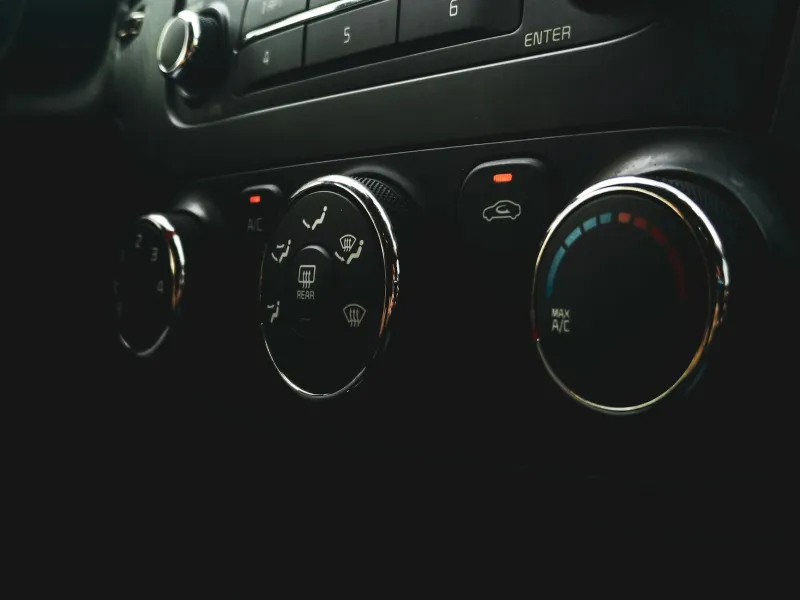
The Cold Truth About Your Car's AC
Here's what most people believe: when you turn on your car's air conditioning, it creates cold air and blows it into your cabin, just like opening a refrigerator door. Push that temperature dial to the coldest setting, crank the fan to maximum, and you're getting the coldest air possible, right?
Wrong on almost every count.
Your car's AC system doesn't manufacture cold air at all. Instead, it performs an elaborate heat-stealing operation that would make a master thief jealous. And that "max cold" setting you rely on? It might actually be working against you.
What's Really Happening Under Your Hood
Your car's air conditioning system operates on a principle that seems almost magical: it removes heat and humidity from the air inside your car, leaving behind air that feels cooler and more comfortable. Think of it as a heat vampire rather than a cold air factory.
The process starts with refrigerant — that mysterious chemical flowing through your AC system. This refrigerant has a superpower: it can change from liquid to gas and back again at relatively low temperatures. When it evaporates inside your car's evaporator (located behind your dashboard), it absorbs heat from the surrounding air. That's the "cooling" you feel.
But the refrigerant doesn't just disappear with that stolen heat. It gets pumped to the condenser at the front of your car, where it releases all that captured heat to the outside air and turns back into a liquid. Then the cycle repeats, continuously moving heat from inside your car to the great outdoors.
Why Humidity Matters More Than You Think
Here's where things get interesting: your AC system is actually better at removing moisture than it is at lowering temperature. That's why a car with working AC can feel comfortable at 75°F, while the same car without AC feels miserable at the same temperature.
When humid air passes over those cold evaporator coils, water vapor condenses out — just like how a cold drink "sweats" on a humid day. This is why you see water dripping under parked cars on hot days. Your AC isn't leaking; it's literally wringing moisture out of the air.
This moisture removal is crucial for comfort. Humid air at 75°F feels much warmer than dry air at the same temperature because sweat doesn't evaporate as easily from your skin. By pulling humidity out of the cabin air, your AC makes you feel cooler even when the actual temperature hasn't dropped dramatically.
The "Max AC" Myth That's Costing You
Most drivers assume that setting their AC to the coldest temperature and highest fan speed delivers maximum cooling power. This logic seems bulletproof: more cold air equals more cooling, right?
Not exactly. Your AC system has a fixed cooling capacity — it can only remove heat so fast. Running the fan at maximum speed often just circulates air before the system has time to properly cool and dehumidify it. You end up with lots of slightly cool, still-humid air instead of a smaller volume of properly conditioned air.
A better approach: set your temperature to a reasonable level (around 72-75°F) and let the system find its rhythm. The fan will automatically adjust to maintain that temperature efficiently. You'll use less fuel and actually feel more comfortable.
When "Broken" AC Isn't Actually Broken
Understanding how your AC really works can save you from unnecessary repair bills. If your AC blows lukewarm air on extremely humid days but works fine in dry conditions, it's probably not broken — it's just overwhelmed by moisture.
On muggy days, your AC system prioritizes dehumidification over temperature reduction. It's working harder to pull water out of the air, which means less cooling capacity for temperature control. This is normal behavior, not a malfunction.
However, if your AC never blows truly cold air, even in dry conditions, then you likely have a real problem — possibly low refrigerant, a failing compressor, or a clogged expansion valve.
The Real Efficiency Secret
Here's the counterintuitive truth about AC efficiency: gradual cooling often works better than shock-and-awe maximum blast. When you first get in a hot car, resist the urge to immediately set everything to maximum. Instead, start with moderate settings and let the system gradually bring down both temperature and humidity.
This approach prevents the system from working so hard that it can't properly dehumidify the air. You'll end up more comfortable, faster, while using less fuel.
Why This Matters
Understanding your AC as a heat-removal system rather than a cold-air generator changes how you use it. You'll make smarter decisions about settings, recognize normal behavior versus actual problems, and probably save money on both fuel and unnecessary repairs.
Next time you turn on your AC, remember: you're not asking it to make cold air. You're asking it to steal heat and humidity from your cabin and dump them outside. And when you think about it that way, the whole system becomes a lot more impressive than just "blowing cold air."