That Green Liquid Under Your Hood Does Way More Than Prevent Overheating
That Green Liquid Under Your Hood Does Way More Than Prevent Overheating
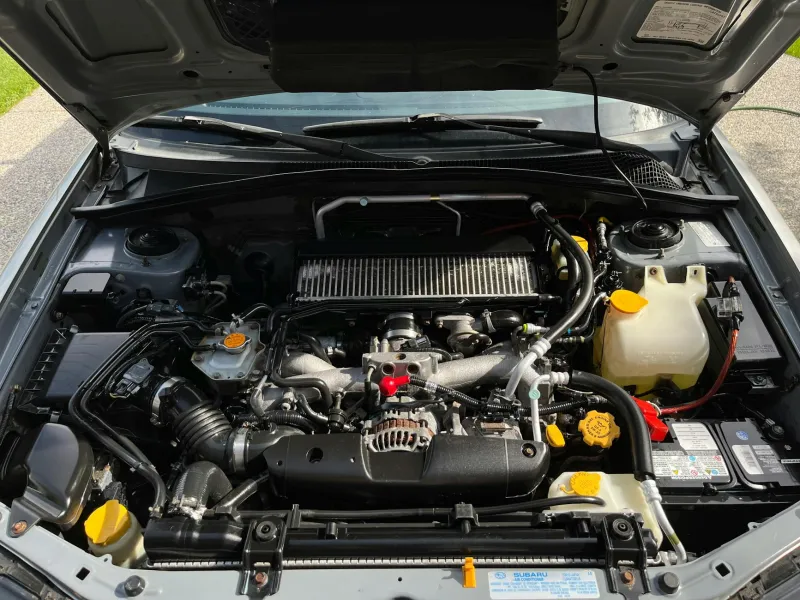
Pop the hood of any car, and you'll spot that reservoir filled with bright green, orange, or pink liquid. Ask most drivers what it does, and they'll confidently tell you it keeps the engine from overheating. They're not wrong, but they're only seeing about 25% of the picture.
Coolant — or antifreeze, as it's often called — is actually one of the most sophisticated fluids in your car, performing a complex balancing act that most people never realize is happening. And the common practice of "just topping it off" without understanding what's already in there? That's quietly destroying more engines than most mechanics care to count.
The Real Chemistry Behind That Colorful Liquid
The base of modern coolant is ethylene glycol, a chemical compound that fundamentally changes how water behaves. Pure water freezes at 32°F and boils at 212°F — terrible operating ranges for an engine that regularly reaches 200°F and might sit outside in sub-zero temperatures.
Mix ethylene glycol with water in the right proportions, and something remarkable happens. The freezing point drops to as low as -34°F, while the boiling point rises to around 265°F. This dramatically expanded temperature range is why your engine can operate in Death Valley heat and Minnesota winters using the same fluid.
But temperature management is just the beginning. That same chemical mixture creates a lubricating film that keeps your water pump's seals and impeller functioning smoothly. Without this lubrication, the water pump — which circulates coolant thousands of times per hour — would fail within months instead of lasting years.
The Silent Killer: Corrosion Protection
Here's where most drivers' understanding completely breaks down. Your cooling system contains aluminum, steel, cast iron, rubber, and sometimes copper — all sitting in the same closed loop. In normal circumstances, these dissimilar metals would create a galvanic reaction, essentially turning your engine into a slow-motion battery that eats itself from the inside.
Modern coolant contains carefully balanced corrosion inhibitors that prevent this electrochemical destruction. These additives form protective films on metal surfaces and neutralize the acids that naturally form when coolant breaks down over time. Without them, your radiator would develop pinhole leaks, your water pump would seize, and your engine block could develop internal corrosion that's impossible to repair.
This is why coolant has expiration dates and change intervals. Those corrosion inhibitors don't last forever — they get consumed doing their job, leaving your cooling system vulnerable to the very destruction they were designed to prevent.
Why Color Coding Became a Nightmare
Walk into any auto parts store, and you'll see coolant in green, orange, pink, blue, and yellow. Most people assume these are just different brands or aesthetic choices, but each color represents a completely different chemical formulation.
Green coolant typically uses Inorganic Additive Technology (IAT) with silicates and phosphates. Orange usually indicates Organic Acid Technology (OAT) with organic acids as corrosion inhibitors. Pink might be Hybrid Organic Acid Technology (HOAT), combining both approaches.
These aren't just marketing distinctions — they're fundamentally different chemical systems that often don't play well together. Mix the wrong types, and you can create gel-like deposits that clog passages, or chemical reactions that actually accelerate corrosion instead of preventing it.
The confusion stems from manufacturers trying to differentiate their products while consumers assumed all coolant was basically the same. This led to the widespread belief that you could mix any coolant as long as you maintained the proper concentration — a costly misconception that's still prevalent today.
The "Top It Off" Trap
When coolant levels drop, the natural instinct is to add more. But unless you know exactly what type is already in your system, you're playing chemical roulette. Even worse, many people add straight water, thinking they're just diluting what's there.
Pure water lacks all the corrosion inhibitors and has the wrong freezing and boiling points. It also contains minerals that can form deposits and scale buildup in narrow passages. What seems like a simple top-off can actually accelerate the very problems coolant is designed to prevent.
The professional approach is to test what's already in the system before adding anything. Coolant test strips can identify the type and condition of existing fluid, while refractometers measure the concentration ratio. These tools cost less than a single cooling system repair, yet most car owners have never heard of them.
Why This Matters More Than You Think
Cooling system failures rarely announce themselves with dramatic symptoms. Instead, they develop gradually — a slightly higher operating temperature here, a small leak there, or corrosion that builds up over years before causing catastrophic failure.
By the time you notice problems, the damage is often extensive and expensive. A new radiator might cost $300, but if corrosion has damaged the engine block or cylinder heads, you're looking at repairs that exceed the car's value.
The Bottom Line
That colorful liquid under your hood is performing a sophisticated chemical balancing act that keeps your engine alive. It's simultaneously managing temperature extremes, preventing corrosion, lubricating moving parts, and maintaining the precise chemical environment your cooling system needs to function.
Treating it like colored water that just needs occasional topping off is one of the most expensive assumptions drivers make. Understanding what coolant actually does — and respecting the chemistry involved — is the difference between a cooling system that lasts 200,000 miles and one that fails at 80,000.