That Little Orange Light Isn't Screaming at You — But You Shouldn't Tune It Out Either
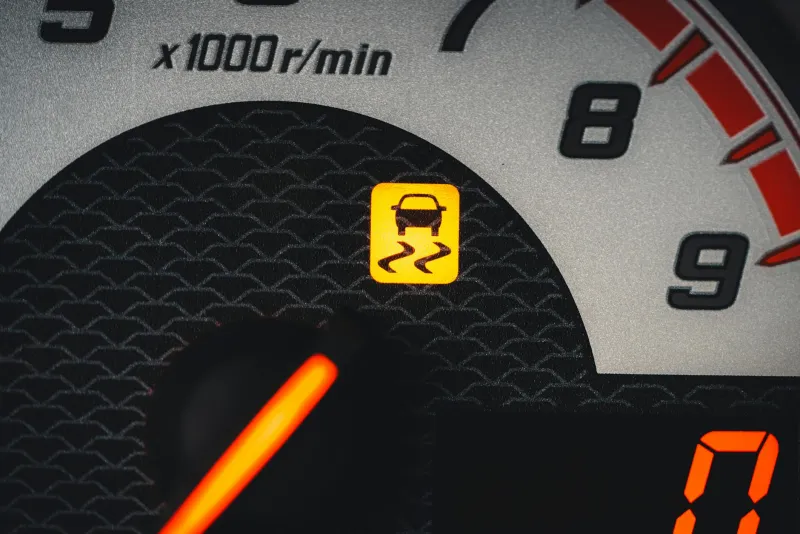
The Light That Launched a Thousand Panic Attacks
You're cruising down the highway, coffee in hand, music on, and then it happens. That little amber glow appears on your dashboard like an uninvited guest who refuses to explain why they showed up. The check engine light. For some drivers, it's instant panic. For others, it's a shoulder shrug and a mental note that never becomes an actual appointment.
Neither reaction is quite right — and both have a way of turning a minor issue into a much more expensive one.
Here's the thing most people never learn: the check engine light isn't a single alarm tied to a single problem. It's connected to your car's onboard diagnostic system, which monitors hundreds of different sensors across the engine, transmission, exhaust, and fuel systems. When any one of those sensors detects something outside its expected range, the light turns on. That's it. The light itself tells you almost nothing specific.
What's Actually Going On Under the Hood
Your car's computer — formally called the OBD-II system, which became standard on all US vehicles after 1996 — stores a fault code whenever something trips the check engine light. That code is what a mechanic reads when they plug a scanner into the port usually located under your dashboard near the steering column.
Those codes cover an enormous range of issues. On the mild end, a loose or improperly tightened gas cap is one of the most common triggers. The fuel system is a closed loop, and even a small pressure leak will set off a code. Tighten the cap, drive a few cycles, and the light often goes off on its own.
On the more serious end, the same light can indicate a failing catalytic converter, misfiring cylinders, a bad oxygen sensor, or problems with the mass airflow sensor. Some of these issues, if left unaddressed, can cause cascading damage. A misfiring cylinder, for instance, can send raw fuel into the catalytic converter, which operates at extremely high temperatures — and that combination can destroy a component that costs anywhere from $500 to over $2,000 to replace.
So the light isn't a fire alarm. But it's also not a suggestion.
The Difference Between Steady and Flashing
This is the part most drivers genuinely don't know, and it matters a lot.
A steady check engine light means the system has detected an issue worth investigating, but it's not necessarily urgent in the next ten minutes. You have time to schedule an appointment within the next few days or week. You probably shouldn't be ignoring it for six months, but you don't need to pull over immediately.
A flashing or blinking check engine light is a different story. That typically signals an active misfire — meaning your engine is misfiring in real time, often bad enough to damage the catalytic converter if you keep driving. When the light is flashing, the right move is to reduce speed, avoid hard acceleration, and get to a shop as soon as reasonably possible. Driving aggressively with a flashing check engine light is one of the more reliable ways to turn a $150 repair into a $1,500 one.
Why the All-or-Nothing Reaction Costs You
The panic response leads people to the dealership in a cold sweat, sometimes paying diagnostic fees and labor rates for something that turns out to be a $12 gas cap. That's not a disaster, but it's an expensive lesson in not checking the obvious things first.
The ignore-it response is riskier. Because the light covers so many possibilities, leaving it unaddressed is essentially gambling. You might be fine for months. Or you might be slowly cooking a sensor that's causing your engine to run rich, burning excess fuel and quietly degrading other components. By the time something forces you to deal with it, the repair bill has grown considerably.
There's also a smog check angle for drivers in California and other states with emissions testing. A check engine light is an automatic failure, full stop. Some drivers discover this the hard way right before their registration is due.
What You Can Actually Do
The cheapest first step is buying or borrowing an OBD-II scanner. They're available at AutoZone, O'Reilly, and Amazon for as little as $25, and many auto parts stores will read your codes for free if you'd rather not buy one. The code won't tell you exactly what's wrong in plain English — you'll still need some context to interpret it — but it narrows things down enormously.
If the code points to something emissions-related and the car is running normally, you've got some breathing room to schedule a non-emergency appointment. If the code points to something in the ignition system, or if you're noticing rough idling, hesitation, or a drop in fuel economy alongside the light, treat it with more urgency.
The Real Takeaway
The check engine light was designed to be informative, not terrifying. The problem is that nobody really explains what it's connected to, so drivers fill in the blank with either dread or denial.
The smarter approach is simple: don't panic, don't ignore it, and find out what the code actually says before deciding how to respond. Most of the time, it's not an emergency. But most of the time isn't all of the time — and knowing the difference is what separates a $40 fix from a $2,000 regret.