The Number You Trust Most on Your Dashboard Is Actually Just an Educated Guess
The Myth: Your Odometer Is Legally Required to Be Perfect
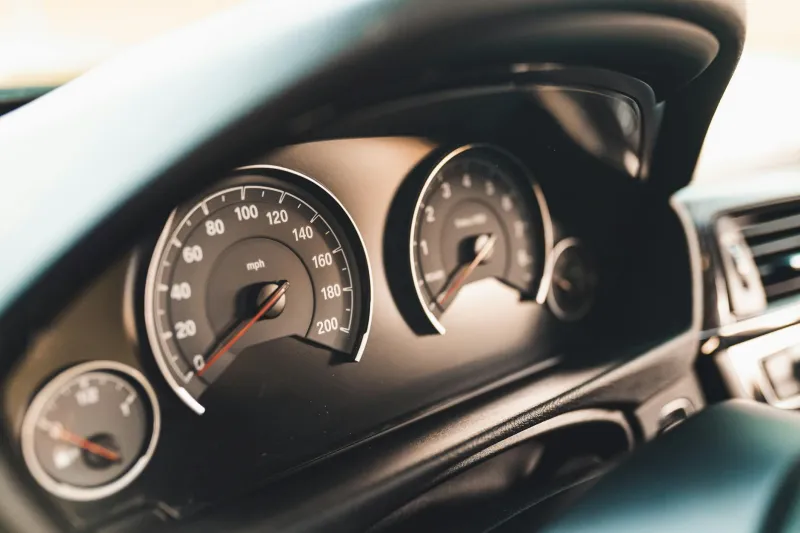
Look at your dashboard right now. See that number showing your car's total mileage? Most drivers assume it's precisely accurate—after all, it determines warranty coverage, resale value, and even legal requirements for disclosure when selling. We trust that six or seven-digit number more than almost any other measurement in our daily lives.
But here's what the car industry doesn't advertise: your odometer is allowed to be wrong. Not just a little wrong—significantly wrong.
The Reality: Federal Law Allows Your Odometer to Lie
Under federal regulations, odometers are permitted to have a margin of error of up to 4% above or below the actual distance traveled. That means if you've driven what you think is 100,000 miles, your car could have actually traveled anywhere between 96,000 and 104,000 miles—and still be completely legal.
For a typical car with 100,000 miles on the odometer, that's potentially 4,000 miles of error. On a newer car with 50,000 miles, you could be off by 2,000 miles in either direction. That's not a rounding error—that's the distance from New York to Denver.
How Odometers Actually Work (And Why They're Imperfect)
Your odometer doesn't measure distance directly. Instead, it counts wheel rotations and multiplies by the circumference of your tire to calculate distance. When your car was manufactured, engineers calibrated this system based on the exact tire size that came from the factory.
Here's where it gets interesting: that calibration assumes your tires maintain their exact original diameter forever. In reality, tires change size constantly.
Brand new tires are actually larger than the size printed on their sidewall due to manufacturing tolerances and tread depth. As they wear down, they get smaller. A tire that starts with 10/32" of tread depth can lose 2/32" or more over its lifetime, reducing its overall diameter by nearly an inch.
That seemingly small change throws off your odometer reading significantly. Smaller tires mean more rotations to cover the same distance, making your odometer overestimate mileage. Larger tires do the opposite.
The Tire Pressure Factor Nobody Talks About
Even tire pressure affects your odometer accuracy. Underinflated tires have a smaller effective diameter, causing your odometer to read higher than actual mileage. Overinflated tires create the opposite problem.
Most drivers rarely check tire pressure, and seasonal temperature changes constantly affect it. A tire that's properly inflated in summer can lose 2-3 PSI when winter hits, subtly changing your odometer's accuracy for months at a time.
When Odometer Errors Really Matter
These discrepancies aren't just academic curiosities—they have real-world consequences:
Warranty Coverage: If your powertrain warranty expires at 100,000 miles but your odometer has been reading high due to worn tires, you might lose coverage on a car that's actually only traveled 96,000 miles.
Lease Agreements: Most leases include mileage limits with expensive penalties for overages. An inaccurate odometer could mean paying hundreds in excess mileage fees for miles you didn't actually drive.
Resale Value: Cars are priced based on odometer readings. A vehicle showing 85,000 miles sells for significantly more than one showing 90,000 miles, even if the actual difference is just calibration error.
Maintenance Schedules: Oil changes, belt replacements, and major services are often tied to odometer readings. Following these schedules with an inaccurate odometer could mean premature maintenance or, worse, missing critical service intervals.
Why This Myth Persists
The belief in odometer precision persists because the numbers look so definitive. Unlike a fuel gauge that clearly shows approximate levels, odometers display exact-looking figures down to the tenth of a mile. This creates an illusion of precision that doesn't match reality.
The automotive industry doesn't publicize odometer tolerances because accuracy isn't really the point—consistency is. As long as your odometer behaves predictably relative to other cars, the system works for warranty periods, maintenance intervals, and resale values.
The Modern Digital Difference
Interestingly, newer cars with digital odometers aren't necessarily more accurate than older mechanical ones. They still rely on the same basic principle of counting wheel rotations, just with electronic sensors instead of mechanical cables. The fundamental calibration challenges remain the same.
Some luxury vehicles now use GPS data to cross-reference odometer readings, but this is far from standard and creates its own complications with tunnels, parking garages, and satellite coverage gaps.
What This Means for You
Understanding odometer limitations doesn't mean you should distrust the number entirely—it just means recognizing it for what it is: a useful approximation, not a precise measurement.
If you've significantly changed your tire size, consider that your odometer accuracy has changed too. Larger aftermarket wheels with low-profile tires often have different overall diameters than stock setups, potentially affecting readings by several percentage points.
For most drivers, these variations average out over time and don't significantly impact daily driving. But if you're approaching a warranty milestone, dealing with lease return, or buying a high-mileage used car, remember that the odometer reading is just the starting point for evaluation, not the final word on a vehicle's actual use.