Aftermarket Air Filters Promise More Power — Your Engine Mostly Just Feels Appreciated
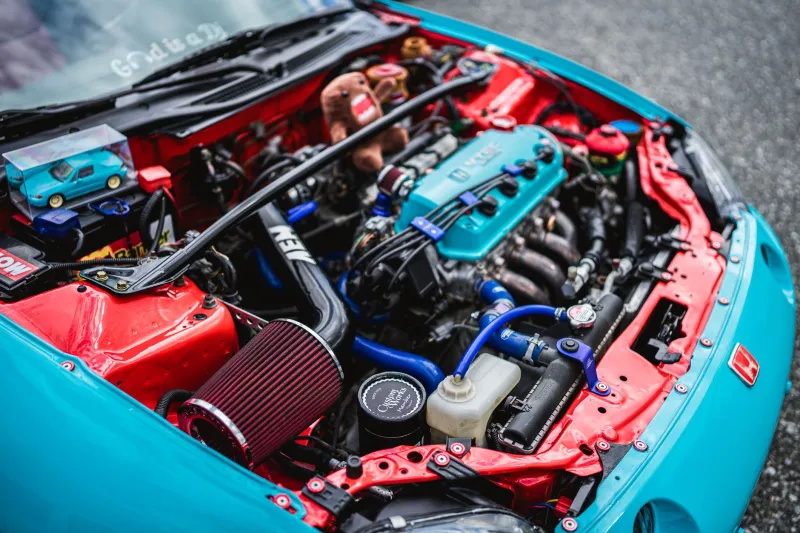
Walk into any auto parts store and you'll find them prominently displayed near the register: high-flow air filters and cold air intake kits promising double-digit horsepower gains and fuel economy improvements that supposedly pay for the upgrade within months. The marketing is confident. The packaging features sports cars and dyno charts. The customer reviews are enthusiastic.
So why do independent tests keep telling a much quieter story?
The Basic Promise and Why It Sounds Reasonable
The logic behind airflow upgrades isn't nonsense. Engines are essentially large air pumps — they mix air with fuel, ignite it, and convert the resulting expansion into motion. More air, in theory, means more complete combustion, which could mean more power and better efficiency. A stock air filter is designed around cost, longevity, and filtration quality. A high-flow aftermarket filter uses a different filter medium — often oiled cotton gauze — that allows more air to pass through per square inch.
That part is real. High-flow filters do flow more air than a standard paper element. The question isn't whether more air enters the system. The question is whether your engine can actually use it.
What the Dyno Numbers Say
Independent dyno testing — meaning testing done outside of the manufacturer's own marketing materials — consistently shows gains from drop-in high-flow filters in the range of 1 to 3 horsepower on naturally aspirated engines under normal driving conditions. Some tests show no measurable gain at all. A handful show slightly negative results if the filter allows more unfiltered particles into the intake, which can happen with improperly oiled cotton gauze filters.
The bigger cold air intake systems, which relocate the filter to a cooler area of the engine bay and replace the entire intake tract, can show more meaningful results — sometimes 5 to 15 horsepower on the right engine platform. But there's an important asterisk: those gains typically appear at high RPM, under wide-open throttle conditions. That's the kind of driving that happens on a track or during aggressive highway passing. It's not what happens during your commute, and it's not what improves your miles-per-gallon during everyday driving.
The Fuel Economy Math That Rarely Adds Up
Many aftermarket air filter companies advertise fuel economy improvements of 3% to 10%. On a car averaging 30 mpg, a 5% improvement would mean roughly 1.5 additional miles per gallon — noticeable over time and potentially meaningful over thousands of miles.
But real-world fuel logs from drivers tracking their mileage meticulously over months before and after installing these products rarely confirm those numbers. The improvements that do show up tend to fall within the normal variation of fill-up to fill-up variance — meaning they're statistically indistinguishable from the natural fluctuation caused by driving style, traffic, temperature, and fuel blend differences between stations.
The reason is straightforward: modern fuel-injected engines use sensors to continuously monitor airflow and adjust the fuel mixture accordingly. The engine control unit (ECU) is already optimizing combustion based on what the mass airflow sensor reports. When you install a filter that flows more air, the ECU adjusts the fuel delivery to match — which is exactly what it's supposed to do. The system self-corrects. The net efficiency gain under normal driving conditions is often negligible.
The Placebo Effect Is Real and Powerful
Here's the layer that makes this genuinely interesting rather than just disappointing: the human brain is exceptionally good at noticing improvement after spending money on something. Psychologists call it the expectation effect, and it shows up reliably in automotive modification culture.
After installing a cold air intake, drivers report that their car "feels" more responsive, that acceleration "seems" crisper, and that the engine "sounds" more powerful — particularly because most cold air intakes produce a more audible intake growl under acceleration. That sound is real. The sensory experience of a louder, more mechanical-sounding engine genuinely changes how a driver perceives performance. It's not imaginary, but it's also not the same thing as a measurable gain in power or efficiency.
This is why customer reviews for these products are almost universally positive even when objective testing is lukewarm. People feel the difference because the experience of driving changes — even when the data doesn't.
When Airflow Upgrades Actually Matter
To be fair to the category: there are specific situations where upgrading airflow produces real, measurable results. Turbocharged and supercharged engines benefit more significantly because the forced induction system can actually use the additional air volume. Modified engines running higher compression or aggressive camshaft timing may be genuinely restricted by a stock intake. And engines that have been tuned specifically to take advantage of increased airflow — through an ECU reflash or custom tune — can show legitimate gains that a stock ECU would simply compensate away.
For a stock, naturally aspirated daily driver? The gains are mostly in the soundtrack.
The Takeaway
Aftermarket air filters and cold air intakes are not snake oil — they're real products with real engineering behind them. But the gap between the marketing claims and what independent testing measures is substantial for most everyday drivers. If you enjoy the intake sound and want to spend $50 to $300 on something that makes your car feel sportier, that's a perfectly reasonable choice. Just don't expect the fuel savings to show up in your monthly gas budget. The improvement you feel after installing one is real — it's just coming from somewhere other than the dyno.