Extended Car Warranties Are Built Around the Repairs You're Least Likely to Need Covered

The pitch is delivered in the finance office, right after you've mentally committed to a car you're excited about. One major repair, the finance manager explains, could run $3,000, $5,000, maybe more. For just a few dollars added to your monthly payment, you can protect yourself from that nightmare scenario. It sounds like common sense.
But the product being sold has been engineered by people who spend their careers studying exactly what fails on cars — and structuring their exclusions accordingly.
How Warranty Providers Think About Risk
Extended vehicle service contracts (the technically correct term — they're not manufacturer warranties) are insurance products at their core. The companies that write them maintain actuarial data on failure rates across makes, models, mileage ranges, and vehicle systems. They know, with considerable precision, what breaks on a 2019 Honda CR-V at 75,000 miles versus a 2018 Ram 1500 at 90,000 miles.
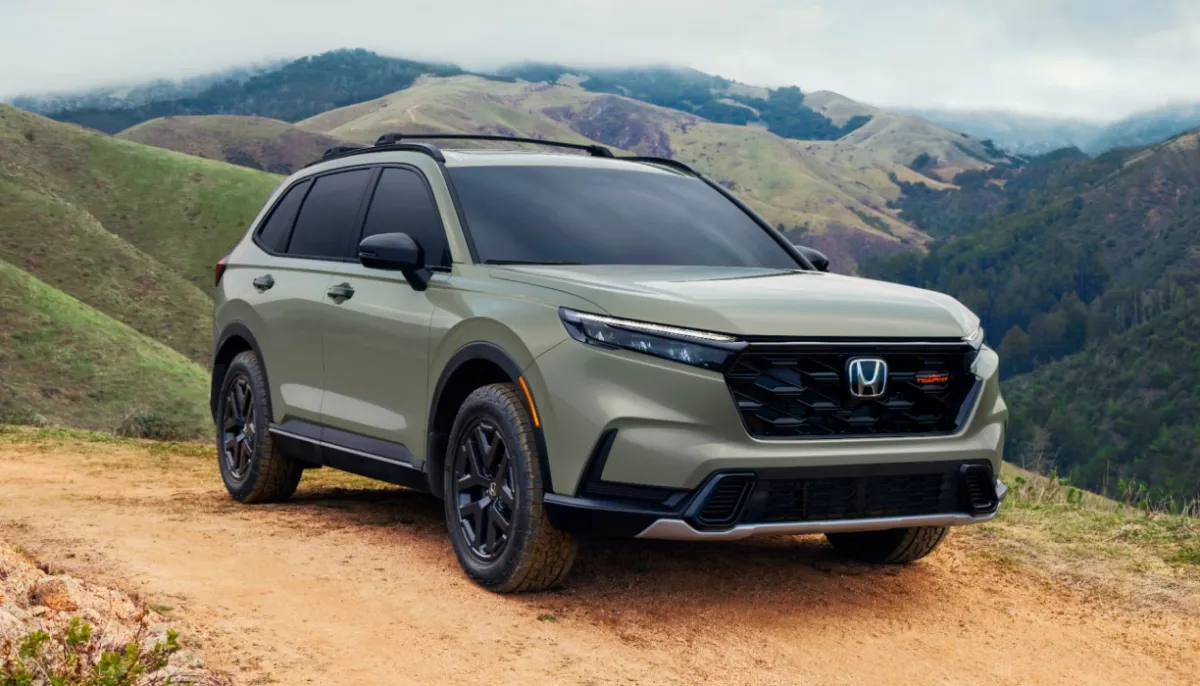 Photo: Honda CR-V, via www.honda.ca
That data doesn't exist to help you. It exists to help them price the product profitably. And the most direct way to protect margins is to exclude the components that fail most frequently while covering the components that are expensive to repair but rarely actually break.
This is the fundamental tension inside every extended warranty: the things most likely to cost you money are often the things least likely to be covered.
What Modern Cars Actually Break
Look at repair frequency data from sources like Consumer Reports, J.D. Power, and large independent repair networks, and a consistent picture emerges. The most common failure categories on vehicles with 60,000 to 120,000 miles include:
 Photo: Consumer Reports, via apps.rhs.org.uk
- Infotainment and electronics — touchscreen failures, sensor malfunctions, software glitches, and connectivity modules
- HVAC components — blend door actuators, blower motors, and climate control modules
- Suspension wear items — control arm bushings, sway bar links, strut mounts
- Seals and gaskets — oil leaks from valve cover gaskets, rear main seals, and transfer case seals
- Turbocharger components — increasingly common as turbocharged engines become standard across most segments
Now look at a typical extended warranty exclusion list. You'll find that many infotainment failures are excluded under "software" or "screens" carve-outs. Suspension components are frequently listed as "wear items" not covered under the contract. Seals and gaskets are sometimes covered only if a covered component caused the failure — meaning if your valve cover gasket leaks on its own, you may be paying out of pocket.
The drivetrain coverage that's prominently advertised — engine internals, transmission, transfer case — is real. But those components failing catastrophically on a well-maintained modern vehicle before 150,000 miles is statistically uncommon. You're buying coverage for the low-probability scenario while the moderate-probability scenarios live in the exclusions.
The Finance Office Is the Most Expensive Place to Buy This Product
Beyond the coverage structure, there's a pricing reality that most buyers never encounter: the same extended warranty coverage costs significantly less when purchased outside the dealership.
When a dealership finance office sells you an extended service contract, they're typically acting as a reseller for a third-party warranty administrator. The dealer marks up the contract — sometimes by $1,000 to $2,500 above their cost — and the markup is folded into your financing, where it quietly accumulates interest over the loan term. A contract that costs the dealer $900 wholesale might be presented to you at $2,400, buried in a monthly payment that feels manageable.
The same coverage — sometimes literally the same administrator and contract terms — can be purchased directly from warranty providers online, often for significantly less. Companies like Endurance, CARCHEX, and others sell directly to consumers. Manufacturer-backed extended warranties (from Ford, GM, Toyota, etc.) can also be purchased from out-of-state dealerships at negotiated prices well below what your local dealer quotes, because dealers are allowed to discount these products.
Additionally, if you're financing through a bank or credit union rather than the dealer, you can often add an extended warranty later — you don't have to decide in the finance office. That pressure to decide on the spot is a sales technique, not a product requirement.
Reading the Contract Before You Sign It
The single most useful thing you can do before purchasing any extended warranty is read the exclusion list, not the coverage list. Marketing materials lead with what's covered. The contract defines what's not. Ask for a sample contract before you agree to anything — any legitimate provider will supply one.
Look specifically for:
- How "wear items" are defined (this category can be broad)
- Whether infotainment and electronics are covered, and under what conditions
- Whether seals and gaskets are covered independently or only as a result of a covered component failure
- The deductible structure — per-visit versus per-repair-order makes a significant difference on complex repairs
- Whether the contract is transferable if you sell the vehicle (transferable warranties add resale value)
The Takeaway
Extended warranties aren't inherently bad products. For certain buyers — people who keep vehicles well past 100,000 miles, those who can't absorb a sudden $2,000 repair bill, or owners of vehicles with known reliability weak spots — they can provide genuine peace of mind. But they're priced and structured by people who understand failure data far better than the average buyer does.
The protection you're paying for is most valuable on the scenarios least likely to happen. The scenarios most likely to cost you money are frequently the ones tucked into the exclusions. Know what you're actually buying before you sign — and know that the finance office is almost never the best place to buy it.