The Break-In Advice in Your Owner's Manual Is a Relic From an Era Your Car Has Never Seen
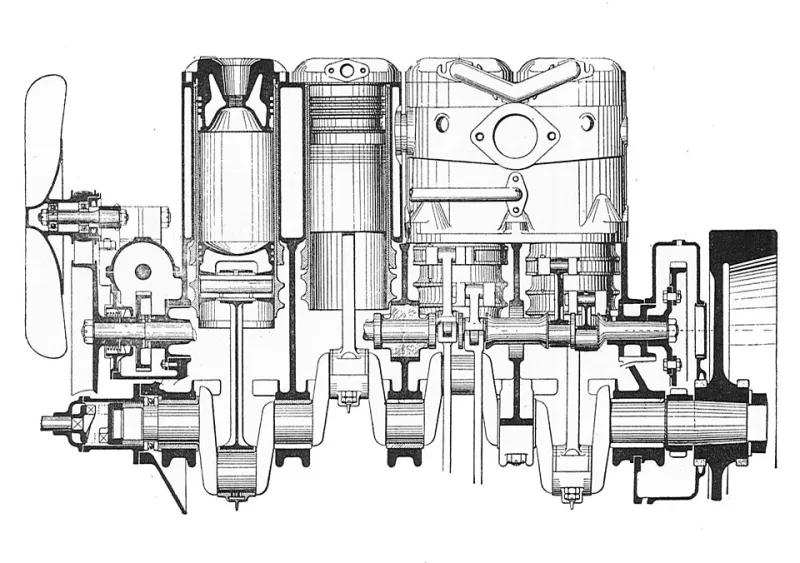
Photo: Andy Dingley (scanner), Public domain, via Wikimedia Commons
The Ritual Most New Car Owners Still Follow
You just drove a brand-new car off the lot. It smells new, it rides smooth, and somewhere in the back of your mind you remember hearing — from a parent, a mechanic, maybe a forum you skimmed at 11pm — that you need to take it easy for the first thousand miles. No hard acceleration. No highway speeds. Let the engine "seat itself."
This advice gets passed down like family wisdom. It feels responsible. It feels like the kind of thing a person who takes care of their things would do.
Here's the part worth examining: for most modern vehicles, it's largely unnecessary — and the reasons why reveal just how dramatically engine manufacturing has changed since the advice was born.
Where the Idea Actually Came From
The break-in period has real historical roots, which is part of why it's so persistent. Through most of the 20th century, engines were assembled with tolerances that required a settling-in phase. Cast iron components needed time to wear against each other and find their fit. Carburetors had to be tuned after some use. Piston rings — the small seals that sit between the piston and the cylinder wall — genuinely needed miles of gradual cycling to conform properly to the cylinder's shape.
On top of that, the oils available at the time were conventional mineral-based lubricants that didn't provide the same film protection we expect today. Running an engine hard before everything had a chance to mate together could cause uneven wear that would follow the car for its entire life.
So the advice made sense. For a 1965 engine assembled with 1965 tools, it was genuinely good guidance.
The problem is that the advice survived the technology.
What's Actually Happening Inside a Modern Engine
Today's engine components are machined to tolerances measured in microns — fractions of a human hair's width. Computer-controlled manufacturing processes have essentially eliminated the rough edges that the old break-in ritual was designed to smooth out. Cylinder walls are honed with a precision that would have seemed impossible to engineers working two generations ago.
Synthetic motor oils, now standard or recommended in the vast majority of new vehicles, form a protective molecular layer that conventional oils never could. They don't need miles of gentle running to do their job — they're effective almost immediately.
Many automakers now perform a factory break-in on the engine before it ever reaches the dealership. Some performance manufacturers — Porsche and BMW among them — have explicitly stated that their engines require no special treatment from the owner during the first miles. Porsche's documentation for several models specifically says drivers can use full throttle after a brief warm-up period.
So Why Is the Advice Still in the Manual?
This is where it gets interesting. A lot of owner's manuals still include some version of break-in language, even if it's softer than it used to be. There are a few reasons for that.
First, manuals are written to cover a wide range of conditions and a wide range of drivers. Automakers build in conservative language partly out of legal caution and partly because not every engine in every trim level is manufactured to the same standard. A base model with a budget powertrain may genuinely benefit from a gentler start than a precision-tuned performance variant.
Second, there's institutional inertia. Manual content doesn't get rewritten from scratch every model year. Language that was accurate in 1992 sometimes persists into 2024 editions because no one flagged it for removal.
Third — and this one is worth sitting with — some manufacturers still include break-in guidance because it shifts responsibility. If something goes wrong in the first few thousand miles, documented advice about gentle driving gives them a reference point in a warranty dispute.
What 'Break-In' Actually Means Today
None of this means you should redline a brand-new engine the moment you leave the lot. There are still reasonable habits worth keeping.
Varying your speed during early highway driving — rather than holding a single RPM for an extended stretch — is still a reasonable practice, primarily for components like brake pads and tires that do benefit from gradual seating. Avoiding extended idling in the first few hundred miles is also sensible, since engines need to reach operating temperature to properly circulate oil.
But the old-school approach of treating your car like a hospital patient for the first 1,000 miles? That's protecting an engine that no longer exists.
The Takeaway
The break-in period is one of those pieces of advice that made complete sense when it was written and has been faithfully repeated ever since — even as the thing it was written to protect has fundamentally changed. Modern engines are built with a level of precision that does most of the work before you ever turn the key. Your owner's manual may still echo older thinking, but the engineering underneath it has moved on. Drive your new car like a car, not like a patient recovering from surgery.