That Five-Star Crash Rating Was Earned in a Lab — Not on the Highway Where You Actually Drive
When you're shopping for a car and you see that five-star safety rating on the window sticker, something in your brain locks in. Five stars. Safe car. Decision made. It's one of those shortcuts that feels completely logical — because why would the government put a number on something if it didn't tell the whole story?
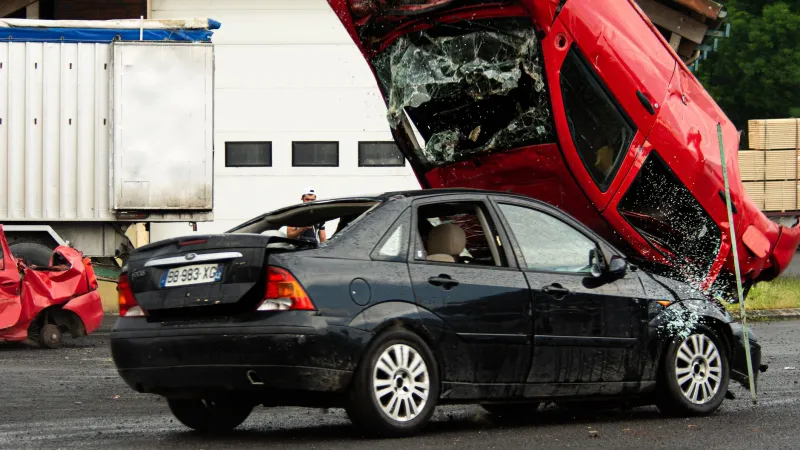
Here's the part that doesn't make it into the brochure: those ratings were earned under conditions so specific, so carefully controlled, that they'd be almost unrecognizable compared to the average fender-bender on a rain-slicked American highway.
How the Ratings Actually Get Made
There are two main organizations handing out safety scores in the US. The National Highway Traffic Safety Administration (NHTSA) runs the New Car Assessment Program, which produces those familiar star ratings. The Insurance Institute for Highway Safety (IIHS) runs its own separate battery of tests and issues ratings like "Good," "Acceptable," "Marginal," and "Poor."
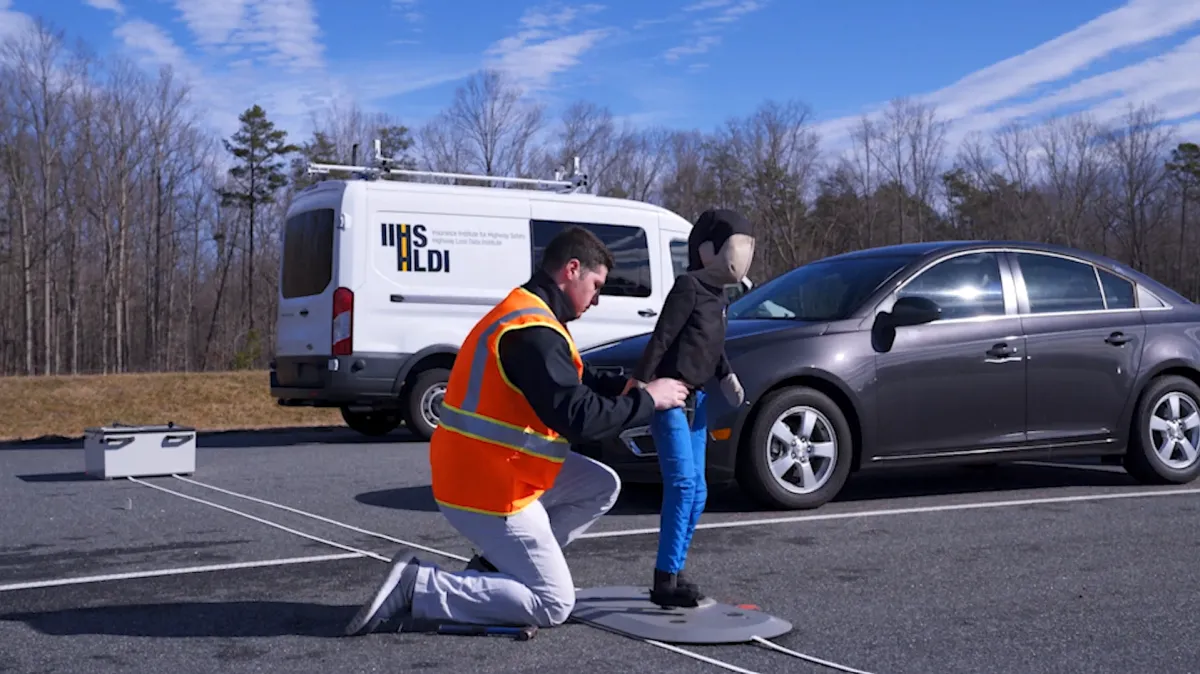 Photo: Insurance Institute for Highway Safety, via mediaroom.iihs.org
 Photo: National Highway Traffic Safety Administration, via mma.prnewswire.com
Both programs are genuinely useful. They've pushed automakers to build meaningfully safer vehicles over the decades, and that's real progress worth acknowledging. But the way each test works involves a level of precision that real-world crashes never cooperate with.
NHTSA's frontal crash test, for example, drives a vehicle into a rigid barrier at exactly 35 mph. The car hits dead center. The barrier doesn't move. The angle is perfect. In an actual collision — say, a distracted driver drifting into oncoming traffic — the speeds vary, the angles are unpredictable, and the other vehicle involved has its own mass and trajectory doing something entirely different.
The IIHS tests are more varied and, many safety experts argue, more demanding. Their small overlap frontal test — introduced in 2012 — specifically targets the front corner of a vehicle, an area that traditional full-barrier tests left largely unexamined. When that test launched, several vehicles with strong existing ratings performed poorly. The structure just wasn't built for that kind of impact geometry.
But even the IIHS tests are still scripted. Same barrier. Same speed. Same angle. Repeated the same way every time, because consistency is what makes comparison possible.
Two Cars, Same Stars, Very Different Crashes
Here's where it gets genuinely interesting. Two vehicles can earn identical ratings — five stars from NHTSA, "Good" across the board from IIHS — and still behave very differently when the crash scenario falls outside the test parameters.
Size and weight play a massive role that ratings don't fully capture. When a midsize SUV and a compact sedan share a five-star rating, that doesn't mean they're equally safe in a collision with each other. Physics doesn't grade on a curve. In a mismatch collision between vehicles of significantly different mass, the lighter vehicle absorbs more of the energy regardless of what either one scored in a controlled test.
There's also the matter of what doesn't get tested at all. Rollover dynamics under real-world evasive maneuvers. Side-impact crashes from vehicles that aren't the standard test barrier. Rear-end collisions at highway speeds. Multi-vehicle pileups. Crashes involving guardrails, trees, or utility poles — which, by the way, account for a substantial share of serious single-vehicle fatalities every year.
NHTSA does include a rollover resistance rating, but it's largely based on a static stability factor — essentially a calculation involving the vehicle's height and track width — rather than a dynamic crash simulation.
Why the Misconception Sticks Around
Star ratings are easy to understand and easy to compare. That's genuinely valuable. Nobody expects shoppers to read a 40-page biomechanical analysis before buying a family vehicle.
But the simplicity of the number creates an implied completeness that isn't there. When you see five stars, your brain reads "safe in crashes" rather than "performed well in these specific, standardized scenarios under controlled conditions."
Automakers know this. Marketing departments lean into high ratings heavily, and there's nothing wrong with that — a good score is worth advertising. But the framing rarely includes the asterisks.
The IIHS has been pushing the conversation forward by continuously updating its test protocols. The 2024 introduction of updated side-impact tests using a heavier barrier — meant to simulate modern SUVs and trucks — immediately caused some previously well-rated vehicles to score significantly lower. The cars hadn't changed. The question being asked of them had.
What This Actually Means for You
None of this means crash ratings are worthless — they're not. A vehicle that scores well across multiple independent test programs is almost certainly better engineered for occupant protection than one that scores poorly. That signal is real.
What it means is that ratings are one layer of the story, not the whole thing. If you're cross-shopping vehicles, look at how each one scored across both NHTSA and IIHS testing, not just one. Pay attention to which specific tests a vehicle struggled with, not just the overall grade. And factor in the practical reality of what you're driving — a smaller, lighter vehicle earning five stars is still a smaller, lighter vehicle.
The stars on the sticker tell you something meaningful. They just don't tell you everything. And in a decision this important, knowing what's missing from the answer matters just as much as knowing the answer itself.