Why Your Odometer Reading Is Actually Just a Very Expensive Estimate
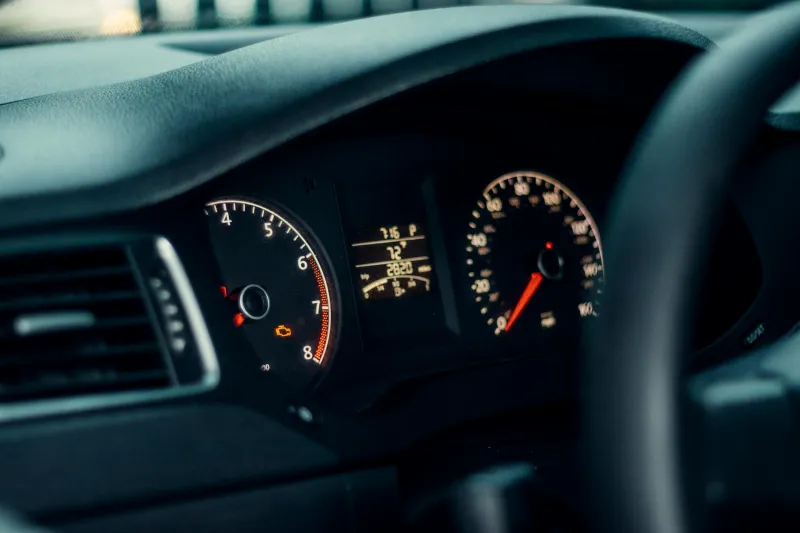
Every time you glance at your dashboard, that odometer reading stares back with the confidence of mathematical precision. 127,543 miles. Not 127,540 or 127,550 — exactly 127,543. It feels like your car's most honest measurement, a digital diary of every journey you've taken.
But here's what most drivers never learn: federal regulations actually allow your odometer to be wrong by thousands of miles, and that margin of error is built right into the system.
The 4% Rule Nobody Talks About
The National Highway Traffic Safety Administration permits odometers to read up to 4% higher than actual distance traveled, but never lower. This isn't a manufacturing defect or regulatory oversight — it's intentional policy designed to protect consumers from odometer fraud while acknowledging the technical realities of measuring distance in a moving vehicle.
What does 4% actually mean in practice? On a car showing 100,000 miles, the actual distance could be anywhere from 96,154 to 100,000 miles. That's nearly 4,000 miles of uncertainty baked into what most people consider their most reliable automotive measurement.
For a vehicle with 200,000 miles on the odometer, you're looking at a potential variance of almost 8,000 miles — roughly the distance from New York to Los Angeles.
 Photo: New York, via wallpapercave.com
Your Tires Are Sabotaging the Math
Your odometer doesn't actually measure distance. It counts wheel rotations and multiplies by the circumference of your tires to estimate how far you've traveled. This system worked fine when it was designed, but it assumes your tires maintain the exact same diameter throughout their entire lifespan.
They don't.
A new tire might measure 26.2 inches in diameter, but after 40,000 miles of wear, that same tire could be down to 25.8 inches. That seemingly tiny difference — less than half an inch — translates to your odometer over-reporting distance by about 1.5%. Over the life of the vehicle, this tire wear alone can create thousands of miles of phantom distance.
The problem compounds when drivers replace tires with different sizes than the factory specification. Installing slightly larger wheels with lower-profile tires, a popular aesthetic modification, can throw off odometer accuracy by 2-3% in either direction. Most drivers never recalibrate their odometer after these changes.
The Manufacturing Reality Check
Even fresh from the factory, odometers start with built-in inaccuracy. Tire manufacturers work within tolerance ranges, meaning your "identical" tires might vary by several millimeters in actual diameter. Speedometer calibration happens with average measurements, not precise individual calculations.
Automakers typically calibrate odometers to read slightly high rather than low, staying safely within that 4% federal allowance while protecting themselves from warranty claims about under-reported mileage. This conservative approach means most odometers gradually accumulate more distance than you've actually traveled.
Temperature changes also affect tire pressure and diameter throughout the year, creating seasonal variations in odometer accuracy that most drivers never notice.
Why This Matters More Than You Think
For daily driving, odometer inaccuracy feels academic. Whether you've driven 50,000 or 52,000 miles doesn't change your commute or fuel costs. But this measurement uncertainty creates real financial consequences in several scenarios.
Used car values hinge heavily on mileage, with buyers often paying premiums for "low-mileage" vehicles or avoiding "high-mileage" ones based on arbitrary psychological thresholds. A car showing 99,000 miles sells differently than one showing 101,000 miles, even though both might represent identical actual usage.
Warranty coverage, maintenance schedules, and lease agreements all reference odometer readings as legally binding measurements. That 4% variance can determine whether your transmission repair happens under warranty or becomes your expensive problem.
Fleet managers tracking vehicle utilization, ride-share drivers monitoring business miles for taxes, and anyone calculating actual fuel economy all rely on odometer accuracy that simply doesn't exist at the precision level they assume.
The Honest Truth About Distance
Modern GPS systems actually provide more accurate distance measurements than your odometer, but they're not legally recognized for vehicle documentation. Your phone probably knows more precisely how far you've driven than your car's computer does.
The next time someone brags about their "low-mileage" vehicle or worries about crossing a mileage threshold, remember that odometer reading represents an estimate with thousands of miles of uncertainty. It's the best measurement system we have for legal purposes, but it's not the precise scientific instrument most people imagine.
Your odometer tells a story about your car's life, but like any good story, it's not necessarily factual down to the last detail. Understanding this limitation doesn't make the measurement useless — it just makes you a more informed consumer who knows the difference between precision and accuracy.