The Floor Mat Marketed for Every Season Has a Secret Weakness
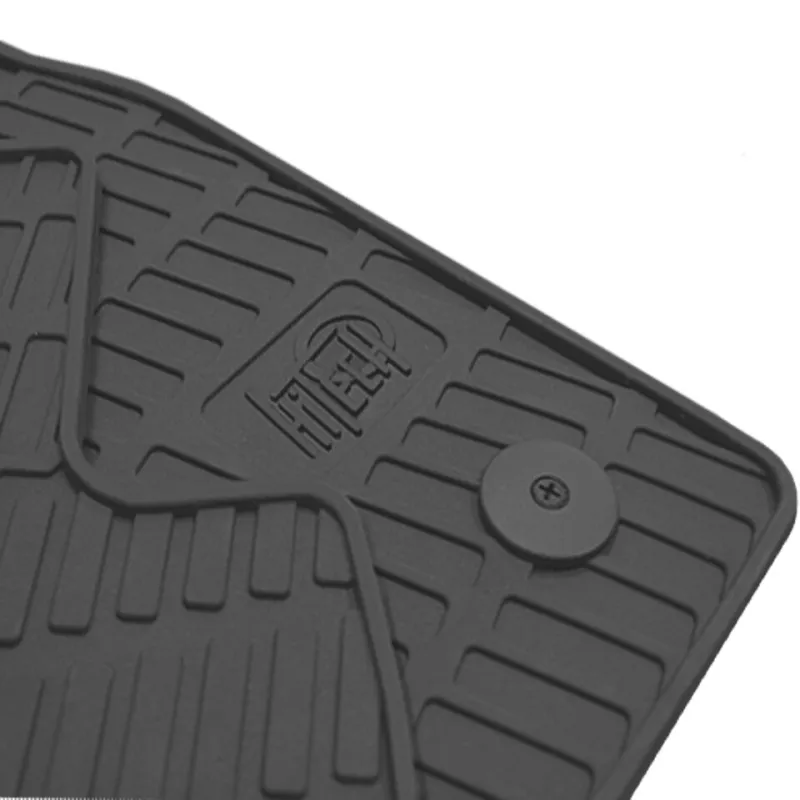
Photo: Keystones, CC BY-SA 3.0, via Wikimedia Commons
Walk into any auto parts store and you'll find rows of floor mats promising to handle anything — rain, mud, snow, slush, whatever your commute throws at them. The label says 'all-weather.' The product photo usually shows a truck parked near a snowy mountain. The tagline is something like built for the elements.
And most of the time, that mat does fine. Until it doesn't.
The thing is, 'all-weather' is a marketing phrase, not a technical specification. And once you understand what these mats are actually made of — and how different materials behave under different conditions — that confident-sounding label starts to look a lot more like a suggestion.
What's Actually in That Mat
Most all-weather floor mats sold in the US are made from one of three materials: thermoplastic elastomer (TPE), thermoplastic rubber (TPR), or PVC. Each one has a different performance profile, and none of them is equally good at everything.
TPE mats are the most common in the mid-range market. They're flexible, reasonably durable, and hold up well in moderate conditions. TPR is a step up — it stays pliable in colder temperatures and tends to resist cracking longer. PVC is the cheapest option and the most problematic in cold climates, though it's often what you're getting when you buy a budget mat off a display hook without much information about what's actually in it.
The issue isn't that these materials are bad. It's that they all have temperature thresholds, and 'all-weather' doesn't specify where those thresholds are.
The Cold Weather Problem Nobody Talks About
Here's the one that catches people off guard: many all-weather mats get stiff — and in some cases, brittle — in sustained cold. If you live somewhere that regularly hits single digits in January, a PVC mat that worked great in October can start curling at the edges, cracking along the raised ridges, or stiffening to the point where it bunches up under the pedals.
That last part isn't just an annoyance. A floor mat that folds or slides under the brake pedal is a genuine safety issue, and it's one that has shown up in real-world incidents often enough that the NHTSA has documentation on floor mat interference as a contributing factor in accidents.
TPE and TPR mats handle cold significantly better, but even those have limits. The marketing material won't tell you what those limits are because the packaging isn't required to disclose operating temperature ranges — and frankly, most consumers aren't asking.
Salt Is the Other Problem
For drivers in the Rust Belt, the Upper Midwest, or anywhere road crews spread salt from November through March, there's a second issue that compounds the cold problem. Road salt is corrosive. When it gets tracked into your car, it doesn't just sit there — it interacts with moisture and with the mat itself.
Over time, salt exposure can degrade the surface texture of lower-quality mats, cause edge separation, and break down the anti-slip backing that's supposed to keep the mat in place. The raised channel design that's supposed to trap water and slush? It works fine at first, but in a salt-heavy environment, those channels can trap salt residue that continues to work against the mat material long after you've dried out.
High-quality mats — particularly those made from heavier TPR compounds or laser-cut to fit specific vehicle footwells — handle this better. Custom-fit mats from manufacturers like WeatherTech or Husky Liners are engineered with these conditions in mind and use materials tested to specific temperature and chemical exposure standards. But those aren't what most people grab off the shelf at a gas station or order based on a three-star Amazon review.
Why the Label Persists
The 'all-weather' designation stuck around because it's genuinely useful shorthand for what these mats do better than carpet — they don't absorb water, they're easier to clean, and they don't grow mold after a wet winter. Compared to the factory carpet mat they're replacing, they really are more versatile.
The problem is that 'better than carpet in the rain' and 'performs reliably across every climate condition' are very different claims, and the label doesn't distinguish between them.
Manufacturers also don't have much incentive to add nuance here. Saying 'performs well in moderate climates and light winter conditions' doesn't move product the way 'all-weather' does. And since there's no industry standard or regulatory definition for what 'all-weather' means on a floor mat, the phrase is essentially unpoliced.
What to Actually Look For
If you live somewhere with real winters, a few things are worth checking before you buy:
- Material disclosure: Look for TPE or TPR rather than generic 'rubber' or unlabeled materials. Brands that disclose their compound are usually more confident in its performance.
- Custom fit vs. universal: A mat that's cut to your vehicle's exact footwell dimensions is less likely to shift and bunch. Universal mats save money but trade off fit.
- Temperature rating: Some premium brands list tested temperature ranges. If a brand doesn't mention cold-weather performance at all, that tells you something.
- Anti-slip backing quality: Check that the backing is textured or has retention clips. A mat that slides is worse than no mat at all.
The Takeaway
All-weather floor mats are a legitimate upgrade over factory carpet, and for most drivers in most conditions, they work exactly as expected. But the label oversells the product in ways that matter if you're in Minnesota in February or driving through a salty coastal winter. The word 'all' is doing a lot of heavy lifting, and the mat underneath it isn't always keeping up. Knowing what material you're buying — and what it's actually been tested for — is the difference between a mat that lasts five years and one that's curling at the edges before spring.