Blind Spot Monitors Are Making Drivers Worse at the One Thing They're Supposed to Improve
The Safety Feature That Feels Like a No-Brainer
Blind spot monitoring systems seem like automotive common sense. Little lights on your mirrors flash when vehicles lurk in your peripheral vision. Some systems add audible warnings or even gentle steering corrections. The technology promises to eliminate one of driving's most persistent dangers: the vehicle you can't see.
Automakers market these systems as essential safety upgrades. Insurance companies sometimes offer discounts for vehicles equipped with them. Driving instructors praise them as valuable backup systems. The consensus feels universal — more awareness equals better safety.
But recent research from traffic safety experts reveals an uncomfortable truth: drivers who become accustomed to blind spot monitors often develop worse scanning habits over time, creating a dependency that can actually increase accident risk in certain situations.
How Our Brains Adapt to Automation
Human psychology has a predictable response to automation: we gradually delegate mental tasks to machines. This phenomenon, called "automation bias," affects everything from airline pilots to smartphone users. When technology reliably handles a cognitive task, our brains naturally reduce the mental energy devoted to that function.
With blind spot monitors, this means experienced users often reduce their physical head-checking and mirror-scanning behaviors. Why crane your neck to check blind spots when a computer is doing it for you?
Dr. Bryan Reimer from MIT's AgeLab has studied this behavioral shift extensively. His research shows that drivers with blind spot monitoring systems perform significantly fewer visual checks over time, even in situations where the technology has known limitations.
 Photo: Dr. Bryan Reimer, via content.staatsbibliothek-berlin.de
 Photo: MIT's AgeLab, via www.murcia.com
The irony is striking: a system designed to supplement human awareness often ends up replacing it.
When Technology Fails at the Worst Moments
Blind spot monitors aren't infallible. They struggle with motorcycles, bicycles, and pedestrians — smaller objects that don't always trigger the sensors. Heavy rain, snow, or road salt can interfere with radar and camera systems. Construction zones with unusual lane configurations can confuse the technology.
Most concerning, these systems often fail during exactly the scenarios where accidents are most likely: complex merging situations, highway construction zones, or adverse weather conditions.
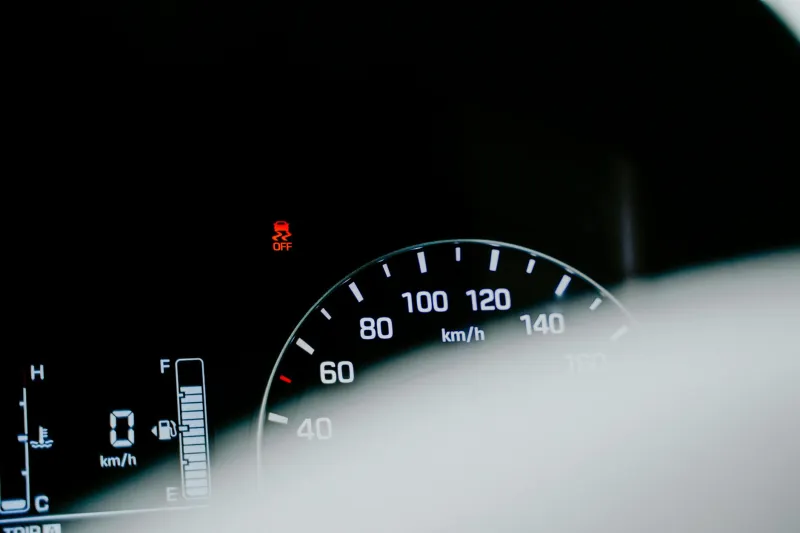
A driver who has grown dependent on blind spot alerts might not notice when the system isn't functioning properly. Many vehicles display small dashboard icons when these systems are offline, but drivers accustomed to relying on the technology might not register the absence of their usual safety net.
The Speed Factor Nobody Talks About
Blind spot monitors face particular challenges at highway speeds. The systems are calibrated to detect vehicles within a certain range, but at 75 mph, cars enter and exit that detection zone much faster than at city speeds.
A motorcycle approaching rapidly from behind might not trigger the warning until it's already alongside your vehicle. By the time the alert activates, the window for safe lane changes has already closed.
Traditional mirror-checking and head-turning habits account for these speed differentials naturally. Experienced drivers instinctively scan farther back and more frequently at higher speeds. But drivers who've grown comfortable with automated alerts often maintain the same checking patterns regardless of speed.
The False Security of Perfect Information
Blind spot monitors create an illusion of complete situational awareness. When the system shows "all clear," drivers feel confident that no vehicles are present. This binary thinking — safe or unsafe, based on a light — replaces the nuanced awareness that comes from actively scanning traffic patterns.
Human vision and judgment excel at processing complex scenarios: the aggressive driver weaving through traffic three cars back, the motorcycle splitting lanes, or the delivery truck with an unusual blind spot. These situations require contextual awareness that current technology can't provide.
Drivers who maintain active scanning habits develop intuitive traffic sense — an ability to predict dangerous situations before they develop. Over-reliance on monitoring systems can erode this crucial skill.
How to Use the Technology Without Losing the Skill
The solution isn't avoiding blind spot monitors entirely. When used properly, they provide valuable additional information. The key is maintaining them as supplemental tools rather than primary safety systems.
Safety experts recommend treating blind spot alerts as confirmation rather than permission. Check your mirrors and blind spots first, then use the monitoring system to verify your assessment. This approach reinforces good scanning habits while still benefiting from the technology.
Some driving instructors suggest occasionally driving vehicles without these systems to maintain fundamental skills. Like pilots who train for manual flight even in highly automated aircraft, drivers benefit from practicing core awareness techniques.
The Training Gap
Most drivers never receive proper instruction on how to integrate blind spot monitors with traditional safety techniques. Dealerships typically provide a quick demonstration of how the lights work, but rarely explain the system's limitations or how to avoid over-dependence.
Driver education programs haven't fully adapted to address these new technologies either. Many courses still focus on pre-automation driving techniques without discussing how to properly integrate modern safety systems.
Reframing Safety Technology
The most effective approach treats blind spot monitors like any other tool: powerful when used correctly, potentially dangerous when misunderstood or over-relied upon.
Think of these systems as advanced mirrors rather than autonomous safety guardians. They extend your vision and provide additional data points, but they don't replace the need for active, engaged driving.
The best drivers use technology to enhance their natural awareness rather than replace it. They understand that true safety comes from the combination of human judgment and technological assistance, not from delegation of responsibility to automated systems.
The Bigger Picture
This pattern extends beyond blind spot monitors to most driver assistance technologies. Adaptive cruise control can reduce following distance awareness. Lane keeping assist might erode steering attention. Each system offers genuine benefits, but also carries the risk of skill erosion if used as a replacement rather than enhancement.
The future of automotive safety lies not in choosing between human awareness and technological assistance, but in learning how to combine them effectively. The drivers who master this balance will be the safest on the road — and the most prepared for the moments when technology inevitably falls short.