Your Car's Interior Air Is Actually Dirtier Than Walking Down a Busy Street
The Myth of the Protected Cabin
Every day, millions of Americans climb into their cars believing they're escaping the smog, exhaust fumes, and particulates swirling around city streets. The logic seems bulletproof: you're sealed inside a metal box with filtered air, while pedestrians are stuck breathing whatever's floating around outside.
Turn out, that metal box might actually be concentrating the very pollutants you're trying to avoid.
What Science Actually Found
Researchers from USC and other institutions have been measuring air quality inside vehicles for years, and their findings consistently challenge our assumptions about automotive air safety. In stop-and-go traffic, the air inside cars regularly contains 2-4 times the pollutant levels found at roadside monitoring stations. During traffic jams, those numbers can spike even higher.
The most shocking discovery? Drivers and passengers often experience higher exposure to harmful particles than cyclists and pedestrians traveling the same routes.
A 2019 study tracking commuters in Atlanta found that people inside cars were exposed to 2-3 times more black carbon (a particularly nasty combustion byproduct) than those walking or biking nearby. Similar patterns emerged for nitrogen dioxide and fine particulate matter—the invisible threats that slip past your body's natural filtering systems.
How Your Car Becomes a Pollution Trap
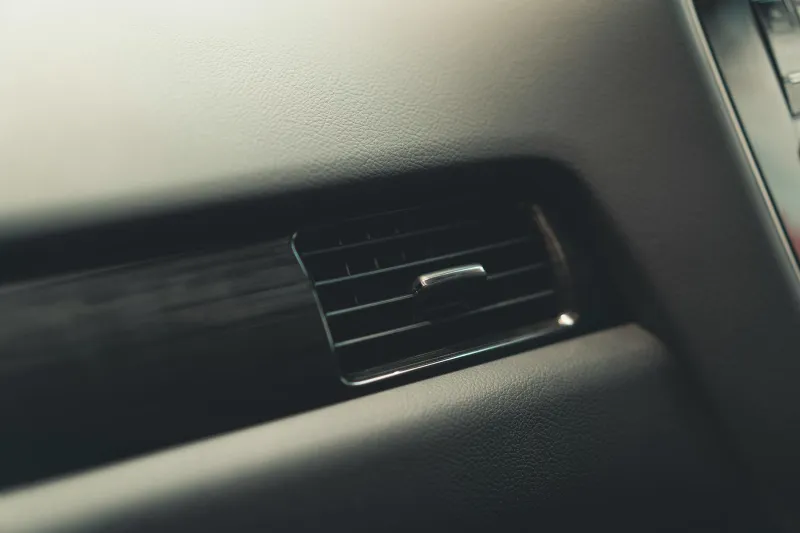
The problem starts with basic physics. When you're driving behind other vehicles, you're essentially following a trail of exhaust. Your car's ventilation system dutifully sucks in outside air, which includes whatever the truck ahead of you just expelled.
But here's where it gets worse: your cabin acts like a holding tank. Unlike the open air, where pollutants can disperse, your car's interior accumulates these particles over time. Even when you switch to recirculation mode, you're often just stirring around contaminated air that's already trapped inside.
The timing makes everything worse. Rush hour traffic—when most people spend the most time in their cars—creates the perfect storm. Engines work harder in stop-and-go conditions, producing more emissions per mile. Meanwhile, reduced airflow around stationary vehicles means exhaust lingers instead of dispersing.
Your Cabin Filter Isn't the Hero You Think It Is
Most drivers assume their cabin air filter handles the heavy lifting, but reality is more complicated. Standard cabin filters catch larger particles like pollen and dust, but they're not designed for the ultrafine particles that cause the most health problems.
Those microscopic particles—smaller than 0.1 micrometers—slip right through conventional filters. They're also the most dangerous, because they can penetrate deep into your lungs and even enter your bloodstream.
Worse yet, most people forget cabin filters exist. The average American drives around with a filter that's months or years overdue for replacement. A clogged filter doesn't just reduce effectiveness—it can actually make air quality worse by restricting airflow and forcing the system to work harder.
The Recirculation Paradox
Many drivers instinctively hit the recirculation button when stuck in traffic, thinking they're protecting themselves from outside pollution. Sometimes this helps, but often it backfires.
Recirculation prevents new outside air from entering, but it also traps whatever's already inside. If you've been driving in heavy traffic for a while, you might be recirculating air that's already contaminated. Plus, recirculation can increase humidity and reduce oxygen levels, creating its own comfort problems.
The most effective approach depends on conditions. In heavy traffic, brief periods of recirculation can help, but you need to cycle back to fresh air mode regularly to prevent accumulation.
What Actually Works
The good news is that small changes can make a meaningful difference. Keeping more distance between you and the vehicle ahead reduces your exposure to fresh exhaust. When possible, staying in the right lane puts you farther from the heaviest-polluting vehicles, which tend to use the left lanes.
Timing matters too. If your schedule allows flexibility, avoiding peak traffic hours dramatically reduces exposure. A 20-minute drive at 10 AM exposes you to far fewer pollutants than the same route at 8 AM.
Upgrading to a HEPA cabin filter helps with smaller particles, though it won't solve everything. More importantly, replacing your filter on schedule—usually every 12,000-15,000 miles—keeps your system working as designed.
The Bigger Picture
This isn't about abandoning cars or living in fear of every breath. It's about understanding that our intuitions about air quality don't always match reality. The metal shell that feels protective can actually concentrate the very pollutants we're trying to avoid.
For most healthy adults, these exposure levels aren't immediately dangerous. But for people with asthma, heart conditions, or other sensitivities, understanding how cabin air works becomes more critical.
The next time you're stuck in traffic, remember: that feeling of being safely sealed away from outside pollution might be exactly backward. Sometimes the protection we assume we have is the thing we need to question most.