The Check Engine Light Came On, Then Went Off — Here's Why That's Actually More Confusing Than It Sounds
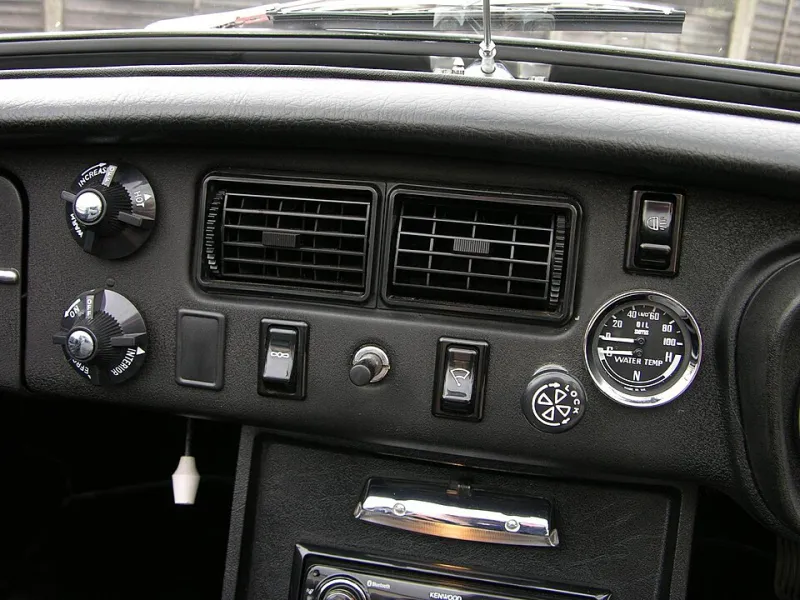
Photo: The Car Spy, CC BY 2.0, via Wikimedia Commons
The Little Light That Causes Outsized Anxiety
Few things in everyday driving produce the kind of low-grade dread that a check engine light delivers. It appears with no explanation, no urgency rating, and no indication of whether you should pull over immediately or just make a mental note to call your mechanic. It glows with the same calm orange intensity whether your gas cap is loose or your catalytic converter is failing.
And then, sometimes, it just turns off. The problem, apparently, solved itself.
Except it probably didn't. And the fact that most drivers don't know what to make of either the light's arrival or its disappearance says a lot about how poorly this system communicates with the people who depend on it most.
What the Light Is Actually Monitoring
The check engine light — formally called the Malfunction Indicator Lamp, or MIL — is part of your car's onboard diagnostics system, commonly referred to as OBD-II. This system has been standardized across virtually all cars sold in the US since 1996, and its primary job is to monitor emissions-related components.
That's worth emphasizing. The check engine light is fundamentally an emissions monitoring tool. It watches sensors throughout your engine, exhaust, and fuel system and illuminates when a reading falls outside of expected parameters. It is not a general "something is wrong" light, even though it gets treated like one.
The system stores diagnostic trouble codes — DTCs — that correspond to whatever triggered the light. These codes can be read with an OBD-II scanner, which plugs into a port usually located under the dashboard near the steering column. Auto parts stores like AutoZone and O'Reilly will often read these codes for free. Your dealership will charge a diagnostic fee to do the same thing, then use the code as a starting point for further investigation.
Here's what those codes don't tell you: they identify which sensor or system reported an anomaly, not necessarily what caused it. A code pointing to an oxygen sensor doesn't confirm the oxygen sensor is broken. It confirms the oxygen sensor reported a reading outside its expected range — which could mean the sensor itself is faulty, or it could mean something upstream is causing it to read incorrectly.
Why It Sometimes Goes Off on Its Own
The OBD-II system is designed to perform ongoing self-checks called readiness monitors. These monitors run under specific driving conditions — certain speeds, temperatures, load levels — and evaluate whether various systems are performing within spec.
If a fault is detected and triggers the check engine light, but subsequent drive cycles show the system performing normally, the light may turn off automatically. The code isn't erased immediately — it typically remains in the system's memory as a "pending" or "historical" code for a period of time before being cleared — but the light goes dark.
This is why a loose gas cap is the classic check engine light story. The evaporative emissions system detects a pressure anomaly, the light comes on, you tighten the cap, the system re-tests itself over the next few drive cycles, everything checks out, and the light disappears. Problem solved — in that case.
But the same self-clearing behavior can happen with intermittent faults that are not resolved. A failing oxygen sensor that produces erratic readings might trigger the light on days when the fault is detectable, then allow the light to turn off when the sensor happens to perform within range. The underlying problem is still there. The light's absence just means the system didn't catch it on that particular cycle.
The Severity Problem Nobody Solves for Drivers
One of the most significant design limitations of the check engine light is that it provides no indication of urgency. A single steady light is your only notification for an enormous range of potential issues — from a vapor leak in the fuel system to a misfiring cylinder to a degraded catalytic converter.
Some manufacturers use a flashing check engine light to indicate a more severe, active misfire that could damage the catalytic converter. That distinction is meaningful. But outside of that one variation, the light communicates nothing about severity, nothing about how quickly you should act, and nothing about whether it's safe to keep driving.
Drivers are left to make their own judgment calls with no real information. Some people rush to the dealership the moment the light appears. Others drive for months ignoring it, hoping it resolves on its own. Both responses are understandable given how little the light tells you — and both can be appropriate or completely wrong depending on what's actually going on.
Why This Setup Works Well for Dealerships
The ambiguity of the check engine light creates a reliable stream of diagnostic appointments. When a light appears, most drivers don't have the tools or knowledge to read the code themselves. They go to a shop, pay a diagnostic fee — often between $100 and $150 — and receive a code that may or may not come with a clear repair recommendation.
In some cases, the code genuinely points to a component that needs replacing. In others, the recommended repair is more of an educated guess based on the most common cause of that particular code. And in still others, the light has already turned off by the time the appointment happens, leaving the technician to either retrieve the stored historical code or, if enough time has passed, find nothing at all.
The system wasn't designed to deceive anyone. It was designed as a diagnostic tool for trained technicians who understand how to interpret codes in context. But it gets experienced by ordinary drivers as a mysterious warning that offers no practical guidance — and that gap between what the system does and what drivers need it to do is where a lot of unnecessary anxiety and unnecessary spending happens.
What You Can Actually Do
The single most useful thing you can do when a check engine light appears is read the code before taking any other action. A basic OBD-II scanner costs between $20 and $50 at any auto parts store, and many stores will read the code for free at the counter. Knowing the code doesn't mean you'll know exactly what's wrong, but it gives you something concrete to research and a starting point for any conversation with a mechanic.
If the light is steady and the car is driving normally, you likely have time to investigate before paying for a diagnostic appointment. If the light is flashing, reduce speed and get the car looked at promptly. And if the light turned off on its own, don't assume the problem is gone — ask a shop to check for stored historical codes, because what self-cleared once often returns.
The Takeaway
The check engine light is an emissions monitoring system wearing a general-purpose warning costume. It turns on for reasons ranging from trivial to serious, communicates nothing about which category you're in, and can turn itself off without the underlying issue being resolved. Understanding what it actually monitors — and knowing you can read its codes yourself — takes most of the mystery out of an experience that's been causing unnecessary stress and unnecessary shop visits for decades.