Your Gas Mileage Tanks Every Winter — Cold Air Gets the Blame, But It's Rarely the Real Culprit
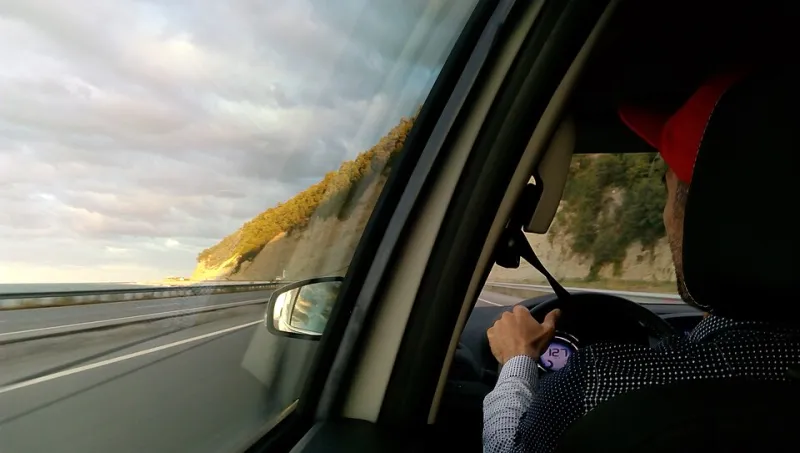
Photo: Tenasan, CC BY-SA 4.0, via Wikimedia Commons
The Assumption Everyone Makes
Every winter, millions of American drivers notice the same thing: their gas mileage quietly gets worse. The number on the fuel economy display ticks down. Fill-ups come a little sooner. And the explanation most people reach for is the simplest one — it's cold outside, and cold air must be harder on the engine.
That's not entirely wrong. Cold air is denser, and that does affect how engines and aerodynamics interact at speed. But if cold air were the main story, the fix would be simple and the effect would be uniform. In reality, the winter fuel economy drop is caused by a cluster of factors that have nothing to do with the temperature itself — and most of them are things drivers can actually influence.
The cold air explanation persists partly because it's easy, and partly because nobody with a financial interest in your fuel consumption has bothered to explain the full picture.
The Fuel in Your Tank Changes in Winter — Literally
Here's something that almost never comes up at the pump: the gasoline you buy in winter is a different formulation than what you buy in summer. Refiners are required by the EPA to produce seasonal fuel blends, and winter-blend gasoline is specifically designed to vaporize more easily in cold temperatures — which helps with cold starts and reduces emissions in the short term.
The tradeoff is energy density. Winter-blend fuel contains slightly less energy per gallon than summer-blend. Estimates from the U.S. Department of Energy suggest this alone can reduce fuel economy by roughly 1 to 3 percent, even before you factor in anything else.
This happens automatically, at every gas station, every year. The transition typically occurs in the fall and reverses in the spring. Your car has no way to compensate for it, and there's nothing on the pump that tells you the blend has changed. You just get slightly fewer miles per gallon and probably assume it's the weather.
Your Engine Is Running Rich Before It's Even Warmed Up
Modern engines don't warm up the way engines from thirty years ago did — but they still have a warm-up phase, and during that phase, fuel economy suffers. Cold engines run a richer fuel mixture (more fuel relative to air) to maintain stable combustion and reach operating temperature faster. Until the engine hits its normal operating range, which can take several minutes in cold weather, it's burning more fuel than it would during a warm-weather start.
Short trips amplify this dramatically. If you're driving five minutes to the grocery store in January, your engine may spend most of that trip in warm-up mode. The average fuel economy for that trip could be significantly worse than your highway rating suggests — not because of the cold air, but because of how long it takes your engine to get ready to work efficiently.
This is also why remote starters, while convenient, can quietly chip away at your winter fuel economy. Running your engine for ten minutes in the driveway to warm the cabin costs you fuel without moving you an inch.
Tire Pressure Does More Than Most People Realize
For every 10-degree Fahrenheit drop in temperature, tire pressure falls by roughly one PSI. That sounds minor until you consider that many drivers are already running tires slightly below the recommended pressure in the first place — and in a cold snap, that gap widens fast.
Underinflated tires increase rolling resistance, which means your engine has to work harder to maintain speed. The effect isn't dramatic on any single trip, but over the course of a winter's worth of driving, it adds up. The EPA estimates that underinflated tires can reduce fuel economy by 0.2 to 0.4 percent per PSI below the recommended level.
The frustrating part is that most drivers don't check their tire pressure more than once or twice a year — if that. TPMS warning lights don't activate until pressure drops significantly below safe levels, so a modest pressure loss flies under the radar all season long.
How You Drive in Winter Matters More Than the Season Itself
Cold weather changes driving behavior in ways that are easy to overlook. People accelerate more gently on slick roads. They brake earlier. They idle longer at intersections waiting for traffic to clear. They run the defroster, heated seats, and rear window heaters simultaneously — all of which pull power from the electrical system and, in non-hybrid vehicles, create additional load on the alternator.
None of these behaviors are bad decisions. They're appropriate responses to winter driving conditions. But they collectively reduce fuel efficiency in ways that have nothing to do with air temperature and everything to do with how the car is being operated.
Heated seats alone can draw a meaningful amount of electrical load. Running the climate system on full blast to defrost windows takes energy. These are real fuel economy factors that show up in the real world but rarely appear in any official fuel economy discussion.
What Automakers Know and Don't Highlight
The EPA's official fuel economy estimates are generated under controlled conditions that don't reflect seasonal fuel variation, cold-start cycles on short trips, or winter driving behavior. Automakers know their vehicles perform differently in winter — the data is available and the physics aren't complicated — but there's no strong incentive to prominently advertise that the window sticker number is even less accurate in January than it is in July.
The EPA does publish a winter MPG estimate on its fueleconomy.gov website, and for many vehicles the drop is significant — sometimes 10 to 20 percent worse than the standard estimate for conventional vehicles, and even steeper for hybrids and plug-in electrics, which lose range in cold weather for additional reasons.
The Takeaway
Your winter fuel economy drop is real, but cold air is more of a backdrop than a cause. Winter-blend fuel, cold-start enrichment cycles, tire pressure loss, increased electrical loads, and adjusted driving behavior are the actual drivers of that seasonal decline. Some of these you can manage — keep your tires properly inflated, minimize unnecessary idling, and consolidate short trips when possible. Others, like fuel reformulation, are simply part of the seasonal reality of driving in the US. Either way, knowing what's actually happening is more useful than blaming the weather.